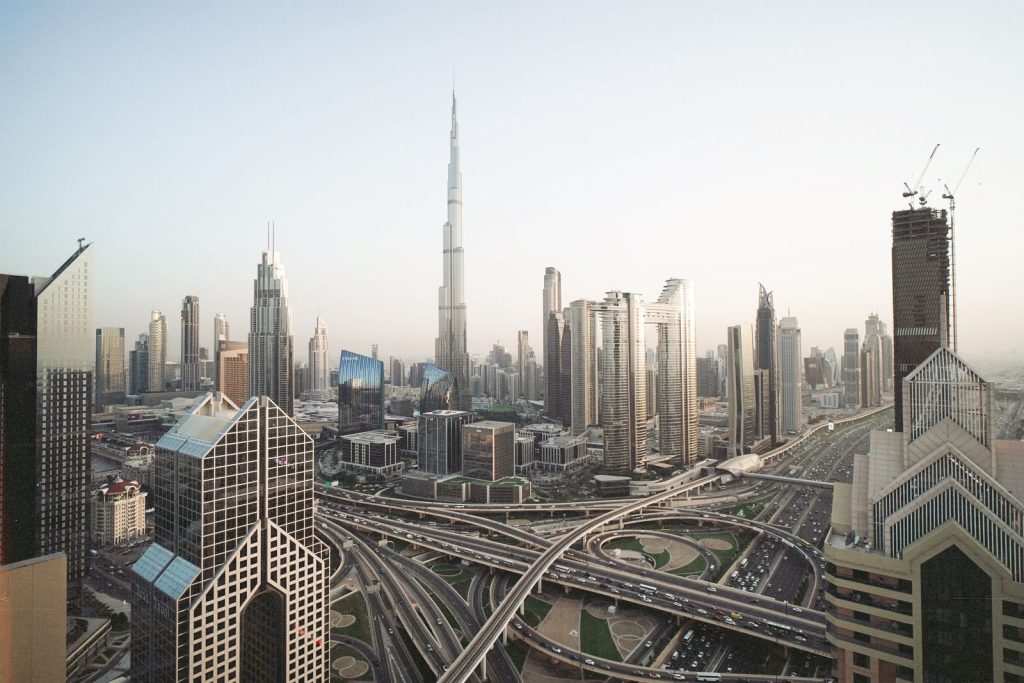
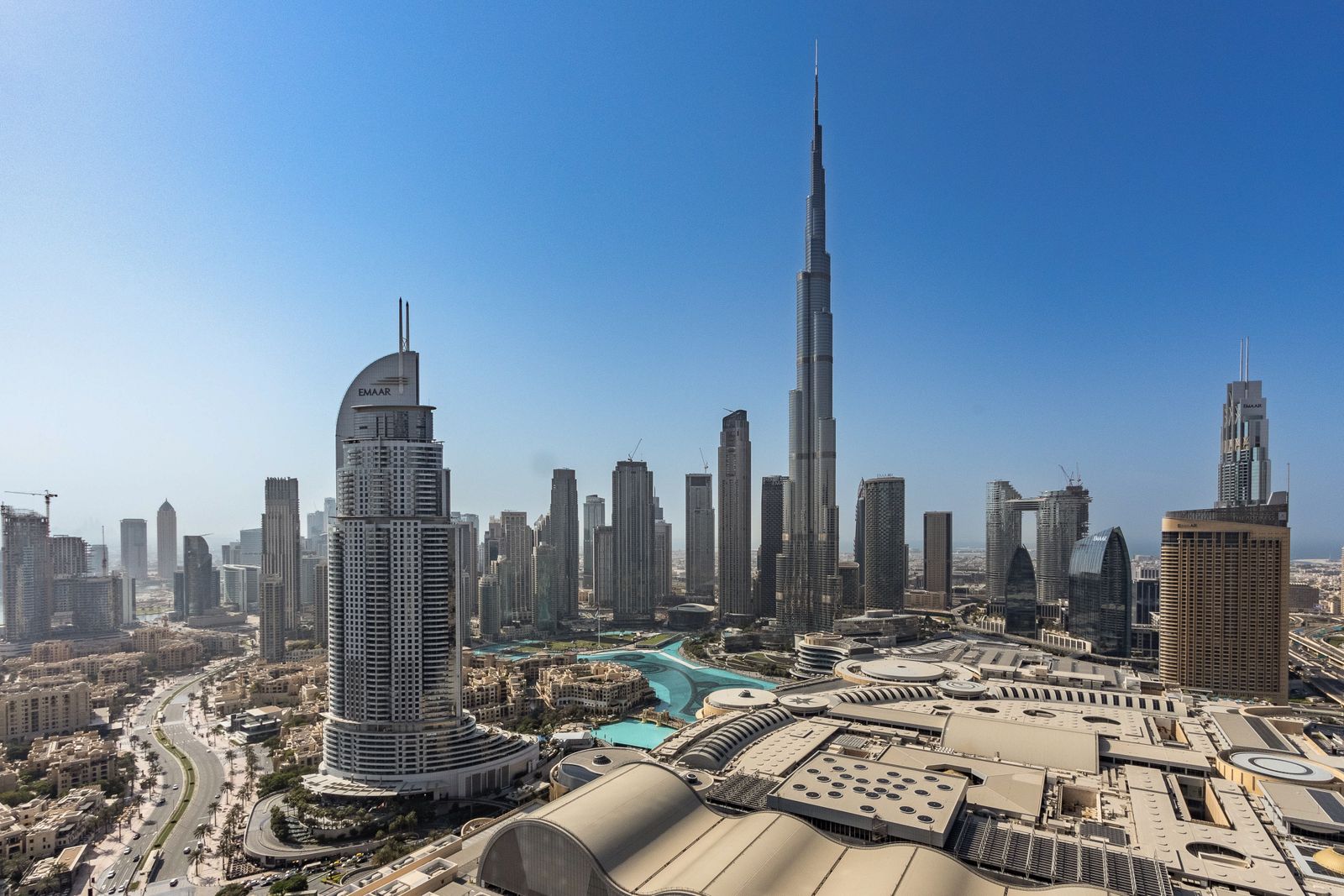
Singapore and Dubai occupy the same sentence in almost every conversation about the world’s most tax-efficient, well-governed, globally connected cities. Low personal taxation, strong rule of law, world-class connectivity, a magnet for capital leaving less certain jurisdictions — the pitch decks read almost identically. But strip away the branding and look specifically at what happens when a foreign buyer tries to purchase property in each city, and the two markets reveal themselves as near-opposites: one built to welcome outside capital directly into real estate, the other built to channel it almost everywhere else.
At a Glance
- Singapore’s Additional Buyer’s Stamp Duty for foreigners: a flat 60% since April 2023, on top of standard stamp duty
- Dubai’s Land Department transfer fee: a flat 4%, with no nationality-based surcharge of any kind, and no annual property tax afterward
- Singapore’s annual property tax on non-owner-occupied residential units runs 12% to 36% of Annual Value, every year, for as long as the property is held
- Singapore restricts landed housing for foreigners to cases with special government approval; Dubai’s freehold zones open both apartments and villas to full foreign ownership
- Singapore’s Global Investor Programme requires a SGD 10 million business or fund investment for residency; Dubai’s Golden Visa is available from an AED 2 million property purchase
The Foreigner Tax Nobody Budgets For
Since April 2023, Singapore has applied a flat Additional Buyer’s Stamp Duty of 60% to any foreigner purchasing residential property — condominium, apartment or approved landed home — regardless of whether it is a first purchase or a fifth. Layered on top of the standard Buyer’s Stamp Duty, which is graduated from roughly 1% to 6%, a foreign national buying a SGD 2.5 million condominium can face close to SGD 1.6 million in stamp duties alone before a single renovation invoice arrives. A handful of nationalities — the United States, Iceland, Liechtenstein, Norway and Switzerland — are exempt under free trade agreements; everyone else pays the full rate.
Dubai’s equivalent friction is the Dubai Land Department’s 4% transfer fee, paid once, with no nationality-based surcharge of any kind. A foreign buyer and an Emirati buyer pay exactly the same rate for exactly the same property. The gap in entry cost between the two cities, on a like-for-like purchase, is not a matter of degree — it is closer to an order of magnitude.
The gap does not close after settlement, either. Singapore levies an annual property tax based on the property’s Annual Value, and non-owner-occupied residential property — which describes most foreign-held investment units — is taxed at progressive rates starting at 12% and rising to 36% on higher-value properties, payable every year for as long as the property is held. Dubai charges no annual property tax at all. Between the entry-cost gap and the recurring annual bill, the two cities are not simply priced differently; they are structured around different assumptions about who property tax is meant to discourage.
Two Different Definitions of Foreign Ownership
Singapore’s Residential Property Act draws a firm line between condominium units, which foreigners can buy relatively freely subject to that 60% ABSD, and landed housing — terraced houses, bungalows, semi-detached homes — which requires special government approval that is rarely granted outside developments like Sentosa Cove. It is a market carefully engineered to let foreign capital in without letting foreign capital compete for the country’s limited supply of landed housing.
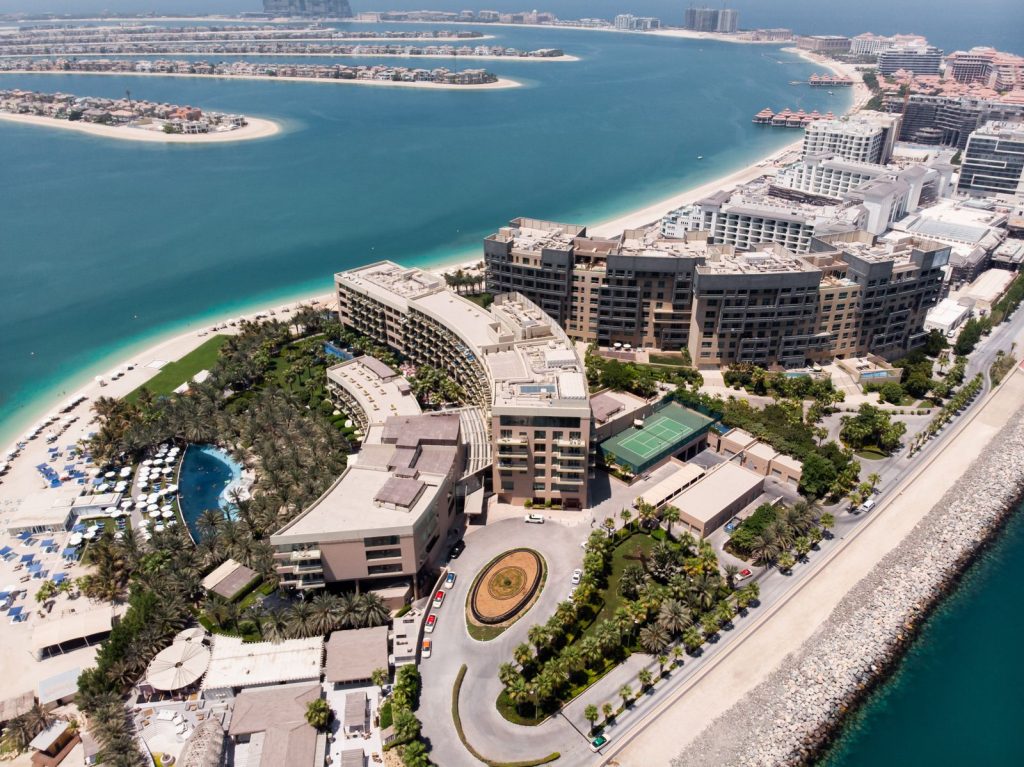
Dubai made the opposite architectural decision when it opened designated freehold zones to full foreign ownership — apartments and villas alike, in areas like Palm Jumeirah, Dubai Marina and Emirates Hills — with no landed-versus-strata distinction and no case-by-case approval process. The buyer selects a zone, not a category of permission.
Residency: Bought Outright vs. Bought Separately
This is where the two cities diverge most sharply. Property investment alone does not, and never has, conferred any residency status in Singapore; the country’s Global Investor Programme requires a minimum SGD 10 million investment into an operating business or approved fund, and real estate does not qualify toward that threshold.
Dubai ties residency directly to the property purchase itself. An investment of AED 2 million, roughly USD 545,000, currently qualifies the owner for a renewable 10-year Golden Visa covering spouse, children and domestic staff, with no minimum-stay obligation. It is a meaningfully lower financial bar than Singapore’s GIP, and one that real estate itself can clear, rather than a separate business investment layered on top of a property purchase.
Frequently Asked Questions
Why is Singapore’s Additional Buyer’s Stamp Duty so high for foreigners?
Singapore uses ABSD as a deliberate cooling measure to manage housing demand and prioritize citizen and permanent-resident access to the market. Since April 2023 the rate for foreign buyers has stood at a flat 60% on top of standard stamp duty, applied uniformly regardless of how many properties the buyer already owns, making it one of the highest foreign-buyer property taxes anywhere in the world.
Can foreigners buy landed property in Singapore the way they can in Dubai?
Generally, no. Singapore’s Residential Property Act restricts landed housing purchases by foreigners to cases with special government approval, rarely granted outside specific developments such as Sentosa Cove. Dubai’s freehold zones, by contrast, allow foreign buyers to purchase both apartments and villas outright with no landed-versus-strata restriction.
Does either city offer residency through property investment?
Dubai does — a property purchase of AED 2 million or more currently qualifies for a renewable 10-year Golden Visa. Singapore does not offer residency through real estate; its Global Investor Programme requires a minimum SGD 10 million business or fund investment, entirely separate from any property purchase.
Singapore’s model is not a design flaw — it is a deliberate choice by a small, land-constrained city-state to keep housing supply insulated from the same global capital flows it actively courts in banking and business. That trade-off has kept Singapore’s market remarkably stable, which is exactly what a certain kind of long-horizon investor is looking for. But for buyers who want direct, unrestricted ownership, a residency pathway built into the purchase itself, and an entry cost measured in single rather than double-digit percentages, the comparison tends to tilt clearly toward Dubai. At Arsha Homes, we talk to plenty of Singapore-based investors who hold property in both cities for exactly this reason — Singapore for its stability, Dubai for the access, growth and flexibility that its more open ownership structure makes possible.