Walk into a newly finished premium residence in Dubai this year and the first thing you notice is what’s missing: the stark white walls, the glossy marble-everywhere look, the cold minimalism that defined the last decade of “luxury” as a design category. What’s replaced it is quieter and, frankly, harder to get right — a kind of warmth that has to be built into material choices and proportions rather than applied as a finishing coat.
Warm Minimalism Replaces Cold Luxury
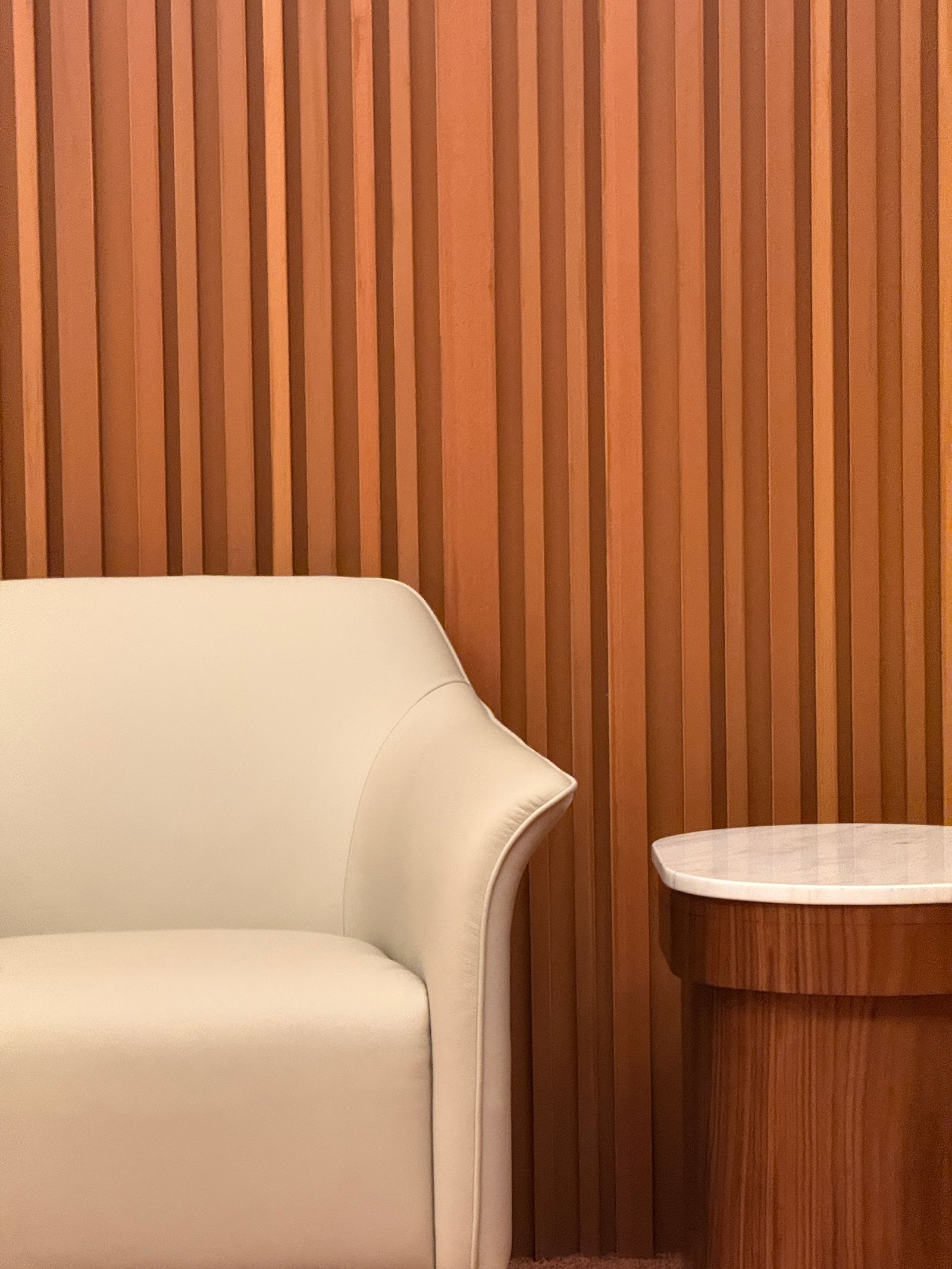
The dominant shift in 2026 interiors is best described as warm minimalism — restrained in form but rich in texture, a deliberate move away from the stark, gallery-white minimalism that Dubai interiors leaned on through the 2010s. The discipline hasn’t disappeared; clean lines and uncluttered layouts remain the backbone of premium design. What’s changed is the emotional register. Rooms are being asked to feel inhabited rather than staged, which in practice means fewer hard reflective surfaces and more materials that show a bit of grain, weight or hand-finishing.
It’s a subtle distinction but a real one: a minimalist room and a warm-minimalist room can share almost the same floor plan and still feel entirely different depending on what the surfaces are made of.
Materials With Presence
That surface question is where 2026’s interiors are doing their most interesting work. Walnut and other warm timbers, honed rather than polished stone, and bronze or aged-brass hardware are displacing the high-gloss marble and chrome combinations that once signalled luxury by default. Textiles have followed the same logic — crisp linen and lavish velvet appear far more often than the synthetic, easy-clean fabrics that dominated a decade of short-term-rental-driven design.
There’s also a quieter, more responsible thread running through material choices at the top end of the market: low-VOC finishes, longer-life surfaces and repairable materials are being specified more deliberately in premium fit-outs, not just for sustainability credentials but because clients are increasingly aware that a home meant to be lived in for a decade should be built from things that age rather than things that simply wear out.
Palettes: Desert Tones Over Stark White
Colour has moved in the same direction as material. Neutral palettes — beige, sand, ivory, muted greys — remain the foundation of most premium interiors, but they’re now being paired with deeper, earthier accent tones rather than left to stand alone in a field of white. The reference point has shifted from international showroom minimalism toward something closer to the desert itself: sun-bleached stone, umber, terracotta, and the deep green of the biophilic elements increasingly built into these same homes.
The net effect is a palette that photographs less dramatically than the all-white interiors of a few years ago, but reads as considerably more expensive in person — a trade most serious interior designers are happy to make.
Cultural Layering: Local Craft Inside Global Design
The other quiet shift is how consciously current interiors borrow from regional craft rather than importing a generic international look wholesale. Mashrabiya-inspired lattice screens are showing up as room dividers and staircase balustrades rather than purely decorative facade elements, filtering light into a room the way traditional timber screens once tempered it across a courtyard. Geometric patterning drawn from Arabic architectural tradition appears in flooring inlays and joinery detail, usually restrained to a single feature wall or ceiling coffer rather than repeated across an entire space.
Furniture has followed the same instinct. Bespoke, commissioned pieces — built for a specific room rather than selected from an off-the-shelf luxury catalogue — are increasingly common in premium fit-outs, often referencing majlis-style low seating and gathering layouts reworked for a contemporary living room. It’s a subtler form of luxury signalling than a recognisable brand name on a sofa, and one that’s harder to replicate at scale, which is precisely the point.
Smart Layouts, Quiet Technology
A third defining thread in 2026 is flexibility. Fixed, single-purpose rooms are giving way to layouts that can absorb a home office one year and a nursery the next, without a renovation in between. Smart-home integration has become close to standard in this segment, but the better executions keep the technology out of sight — lighting, climate and security systems that operate quietly in the background rather than announcing themselves through visible panels and screens on every wall.
- Warm minimalism — restrained form, richer texture, less cold reflectivity
- Walnut, honed stone, aged bronze — materials chosen to age well, not just photograph well
- Desert-inspired neutrals with deeper accent tones, replacing stark white
- Flexible layouts and smart systems designed to stay visually quiet
Taken together, these shifts point toward a single underlying idea: luxury in 2026 is being defined less by how much a space announces itself and more by how well it’s built to actually live in.
Frequently Asked Questions
What is “warm minimalism” in the context of Dubai interior design?
It refers to interiors that keep minimalism’s clean lines and restraint but replace cold, high-gloss surfaces with warmer, textured materials — walnut, honed stone, linen — so the space feels inhabited rather than clinically staged.
Which materials are defining premium Dubai interiors in 2026?
Walnut and other warm woods, honed (not polished) natural stone, aged bronze and brass hardware, plus crisp linen and velvet textiles, are the materials most associated with the current premium segment.
Are all-white interiors still considered luxurious in Dubai in 2026?
Less so than in previous years — the dominant palette has shifted toward sand, ivory and muted neutrals layered with deeper earthy accent tones, a move away from the stark white and cool grey interiors that were once the default luxury signal.
At Arsha Homes, we walk enough newly delivered units each month to notice these shifts before they show up in showroom brochures — and material honesty is one of the clearest signals we look for when assessing whether a residence has been finished to last or finished to sell. It’s a distinction that matters more than most buyers realise at the point of purchase.