
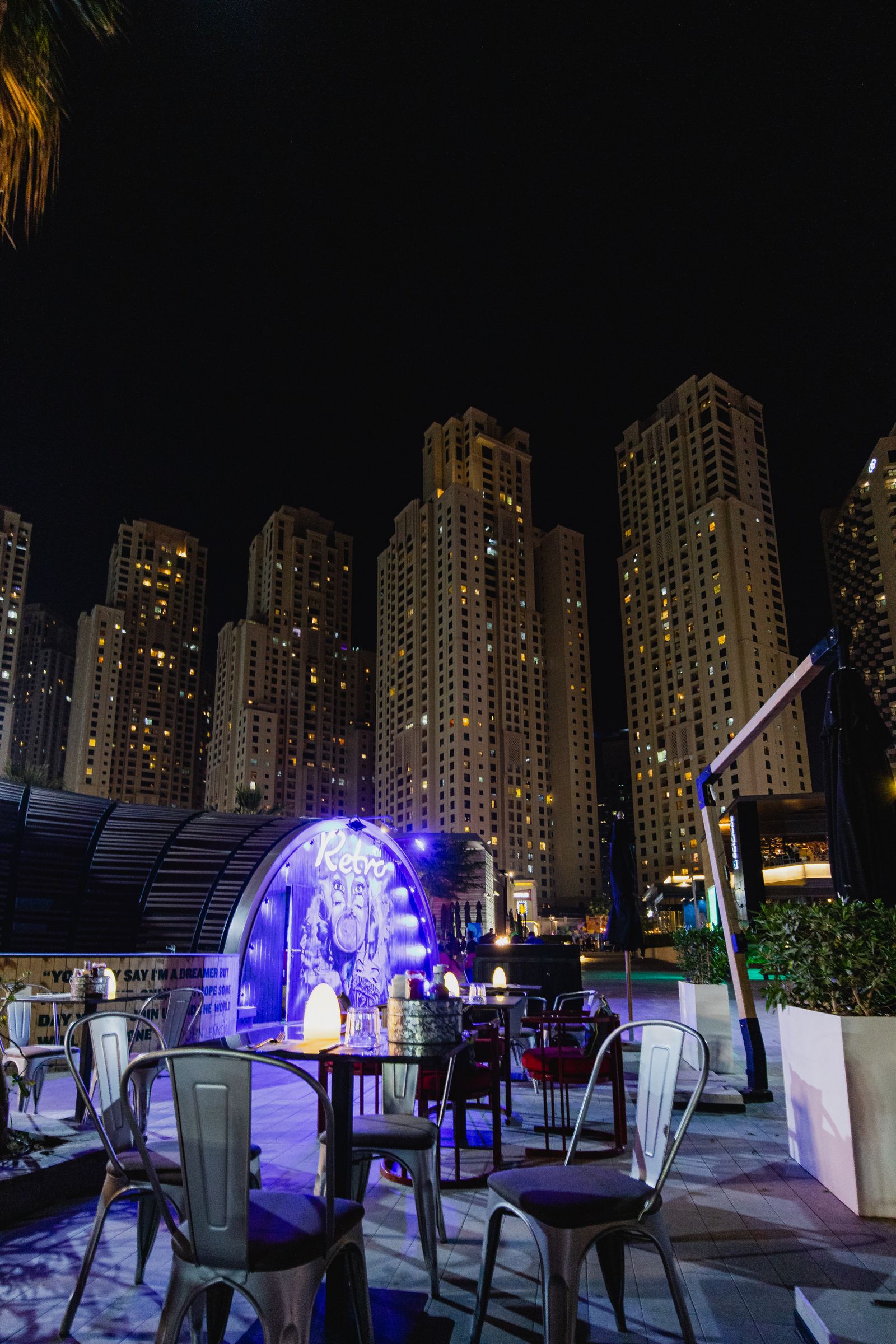
Ask a longtime Dubai resident to name the city’s most desirable neighbourhoods, and the answer rarely starts with square footage or service charges. It starts with a restaurant. The cobblestone corner in City Walk where a favourite café spills onto the pavement. The stretch of JBR promenade where dinner reservations run late into a warm evening. The DIFC address that decided, at some point in the last decade, to become as serious about its tasting menus as it is about its trading floors. Across Dubai, a strong dining and evening scene has quietly become one of the most reliable signals of a neighbourhood’s broader desirability — not because good food raises property prices on its own, but because the ingredients that produce a great dining district are, almost without exception, the same ingredients that produce a great place to live.
Why a Good Table Says So Much About a Neighbourhood
A dense, high-quality dining scene doesn’t appear by accident. It requires walkability, evening footfall, a critical mass of residents and visitors willing to linger, and landlords or master developers curating retail with some discipline rather than filling units with whatever tenant signs first. Those same conditions — walkable streets, active evenings, thoughtful curation — are precisely what makes a neighbourhood pleasant to actually live in, day to day, independent of any restaurant. In that sense, dining quality functions almost as a proxy indicator: where the food is genuinely good and varied, the underlying urban design usually is too.
City Walk’s European Promenade
City Walk built its identity around this idea from the outset. Its European-style streetscape, cobblestone paths and open-air cafés were designed less as a shopping destination than as a neighbourhood meant to be walked through slowly, with dining as the connective tissue between boutiques, cinema and residential blocks. The result is a district that reads as distinctly liveable rather than purely commercial, and it’s among the reasons City Walk has established itself as one of the more sought-after addresses in the city — residents get a genuine evening life on their own doorstep, not a drive away.
JBR and Bluewaters: Beachfront Tables, Photogenic Evenings
Along the coast, JBR has built one of Dubai’s most recognisable dining strips almost by geographic inevitability — hotels, restaurants and beach access sitting side by side along a promenade that residents and visitors alike use as their default evening walk. The variety is part of the appeal: rooftop dining, beachside brasseries, casual and formal options within a few minutes of each other, all with the Gulf as a backdrop. A short walk or water-taxi ride away, Bluewaters Island has assembled one of the densest concentrations of food and beverage outlets in the city on a single, highly walkable island, reinforcing its position as one of Dubai’s more photogenic and sought-after waterfront addresses. In both cases, the dining density and the real estate desirability appear to have grown together, each reinforcing the other over successive years of development.
DIFC: Fine Dining as a Prestige Signal
DIFC tells a slightly different version of the same story. As Dubai’s financial and business hub, its restaurant scene has evolved into one of the city’s most prestigious, with a concentration of internationally recognised chefs and fine-dining rooms that would not look out of place in London or New York. That culinary weight functions as a kind of prestige signal for the district as a whole — it tells prospective residents and tenants that DIFC is not only a place to work but a place taken seriously as a destination in its own right, which in turn supports its standing as one of the city’s more premium addresses for both commercial and residential real estate.
Reading a Neighbourhood by Its Evening Crowd
For buyers, there’s a practical takeaway in all of this: walk a neighbourhood at eight in the evening, not only at midday. A district’s daytime retail can be curated for a brochure; its evening crowd is much harder to stage. Are the outdoor tables full on an ordinary weeknight, not just a Friday? Do people seem to be walking to dinner rather than driving in from elsewhere? Does the mix of restaurants suggest a resident base that returns often, or a single tourist moment repeated nightly? Those are the kinds of questions that tend to reveal whether a dining scene is a genuine extension of a neighbourhood’s character or a stand-alone attraction with little bearing on daily life there. The strongest addresses tend to pass this test comfortably, because their evening energy is generated by the people who actually live there.
Frequently Asked Questions
Does a strong dining scene actually influence property values, or is it just correlation?
It’s genuinely difficult to separate cause from effect, and dining alone rarely drives value on its own. What’s more accurate is that the conditions producing a great dining district — walkability, curated retail, active evenings — are the same conditions buyers and tenants pay a premium for, so the two tend to move together rather than one simply causing the other.
Which Dubai neighbourhoods are considered the strongest for dining right now?
City Walk, JBR, Bluewaters Island and DIFC each offer a distinct version of a strong evening scene — from City Walk’s European-style café culture to Bluewaters’ dense concentration of restaurants and DIFC’s fine-dining weight. Each appeals to a slightly different lifestyle, which is part of why they attract different types of residents.
Is a lively dining district always a good fit for family living?
Not universally — some of these areas lean toward a younger, more social profile, with noise and footfall extending later into the evening. Families often gravitate toward the quieter residential pockets within or adjacent to these districts, close enough to enjoy the scene without living directly above it.
When we walk a prospective buyer through one of these neighbourhoods at Arsha Homes, the restaurant strip is rarely the headline of the conversation — but it’s almost always part of it, because it tells you something honest about how a place actually gets used after dark. A good table, it turns out, is one of the more reliable ways to read a neighbourhood’s character.