Your Dubai service charge is set by a RERA-approved annual budget for your building, and you can check the official approved rate yourself through the Mollak system and the Dubai Land Department (DLD) service charge index. If what you are billed does not match the approved figure, you can raise it with your Owners’ Association and escalate to RERA.
- Service charges fund the running of shared areas — security, cleaning, lifts, pools, gyms, landscaping, insurance and a reserve fund for major repairs.
- Mollak is RERA’s platform (under Dubai Law No. 6 of 2019 on jointly owned property) that approves budgets and routes payments through audited escrow accounts.
- Your charge is your unit’s area multiplied by an approved rate per square foot; that rate is published in the DLD service charge index.
- Rates vary widely by community and building type — adviser data commonly cites a broad range of roughly AED 8 to AED 30+ per sq ft per year; always check your building’s own figure.
- You can verify the approved rate in minutes through the Dubai REST app or DLD index before questioning a bill.
What service charges actually pay for
When you buy an apartment or villa in a managed community, you buy into shared infrastructure as well as your own four walls. Service charges are the annual contribution every owner makes toward running those shared areas. Typical cost categories include:
- Master community charges — roads, shared landscaping and infrastructure across the wider community.
- Building / common-area charges — security, cleaning, lift maintenance, lobby, corridors.
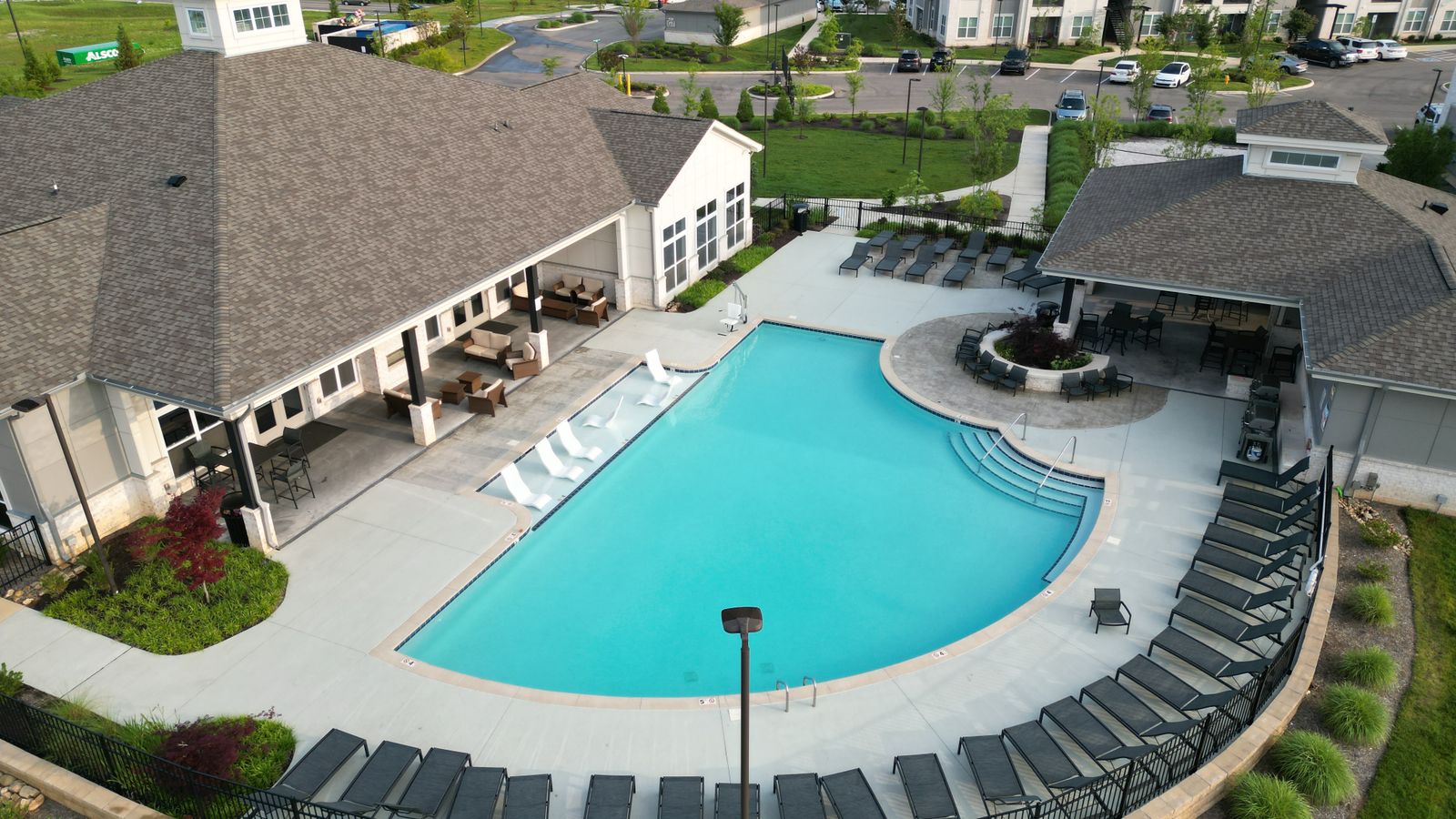
- Amenities — swimming pool, gym, landscaped podium, children’s play areas.
- Utilities for common areas and buildings insurance.
- Reserve (sinking) fund — money set aside for major future repairs such as facade work or lift replacement.
| Charge component | What it funds |
|---|---|
| Master community | Roads, shared landscaping, community security and infrastructure across the whole development |
| Building / tower | Lifts, lobbies, corridors, building insurance and the on-site management office |
| Facilities & amenities | Pool, gym, cleaning, pest control and maintenance of shared areas |
| Reserve (sinking) fund | A fund for major future repairs — roofs, lifts, façade — so owners avoid sudden one-off levies |
| Management fee | The fee paid to the RERA-registered management company that runs the budget and the Mollak account |
Service charges are one of the recurring costs of ownership. For the full picture of what you pay when buying and holding, see our guides to Dubai real estate fees: DLD, service charges & more and the real cost of buying property in Dubai.
The Mollak system explained
Mollak is the electronic system run by the Dubai Land Department and RERA to manage service charges for jointly owned property. According to RERA, the system reflects the provisions of Dubai Law No. 6 of 2019 on jointly owned property. In plain terms, Mollak is the control layer that sits between the management company and owners’ money.
Under the Mollak framework:
- The management entity must prepare a detailed annual budget and submit it to RERA through Mollak before billing owners.
- A RERA-accredited auditor reviews the budget before RERA approves the service charge.
- Collected funds flow through RERA-approved escrow accounts (commonly a general operating account and a reserve-fund account) rather than being held freely by the developer or manager.
- Invoices to owners are issued through the system against the approved budget.
The point of this structure is transparency: owners pay against an audited, approved figure, and the money is ring-fenced for the community rather than mixed with other funds.
How the rate per square foot is calculated
Service charges are not a flat fee — they are a rate applied to your unit’s size. Adviser guidance describes the calculation simply: the total approved annual budget is divided by the total saleable area of all units in the scheme to produce a rate per square foot. Your annual charge is then:
Your unit area (sq ft) × approved rate per sq ft = your annual service charge
So a larger unit pays more in absolute terms, and two owners in the same building pay the same rate per square foot. Rates differ sharply between a simple building and a high-amenity tower with pools, concierge and extensive landscaping.
What is a typical rate?
Rates vary widely by community, building age and amenity level, so there is no single “Dubai rate.” As a labelled range only, adviser and agency data commonly cites annual service charges spanning roughly AED 8 to AED 30 or more per square foot, with simpler communities at the lower end and premium high-amenity towers at the upper end. Treat this as an indicative band, not a figure for any specific building — the only number that matters for your unit is the RERA-approved rate recorded for your project, which you should check directly (see the steps below).
How to check your service charge
You do not have to take a bill on trust. You can look up the official approved rate for your building and compare it with what you are charged. Here is how.
- Find your project details. Have your building/project name, unit number and the relevant budget year ready.
- Open the DLD service charge index. Use the Dubai Land Department website or the Dubai REST app, which exposes the service charge index for registered jointly owned properties.
- Search by project, usage and budget year. The index lets you filter by project, property use and budget year, so you can pull the approved rate for the exact period you are being billed for.
- Read off the approved rate per square foot for your building.
- Calculate your expected charge — multiply your unit’s area by that rate.
- Compare with your invoice. If the billed amount is materially higher than the approved rate implies, you have grounds to ask questions.
This five-minute check is worth doing before every renewal, and especially before you buy — it tells you the true carrying cost of a unit.
Owners’ Associations and your rights
Jointly owned properties in Dubai are run under the Law No. 6 of 2019 framework, with a management entity (what many owners still refer to as the Owners’ Association, or OA) responsible for the budget and the common areas. As an owner you are entitled to transparency on the approved budget and how funds are spent.
A well-run community uses service charges to protect the long-term value of the building. The reserve (sinking) fund is a good example: setting money aside each year for major works such as facade repairs, lift replacement or chiller overhauls means owners are not hit with a large one-off levy when something expensive fails. When you compare two buildings, a slightly higher charge that includes a properly funded reserve can be better value than a low charge that defers maintenance.
Understanding this is part of being an informed landlord or resident. If you let your unit, our landlord’s guide to Ejari and yields covers how service charges affect your net return, and if you are weighing who handles the day-to-day, see self-manage or agency.
What to do if you think your charge is wrong
If the approved-rate check suggests a mismatch, or if services are not being delivered, there is a route to challenge it:
- Request the approved budget and records from your management entity — disputes turn on the approved budget and the association’s records.
- Raise a formal written complaint with the management entity / OA board.
- Escalate to RERA if it is not resolved. Law firm guidance notes owners can file a complaint with RERA under Law No. 6 of 2019, and unresolved matters can be escalated to RERA’s relevant section.
Keep in mind the flip side: unpaid service charges are enforceable. Commentary notes that after a RERA-approved notice, an unpaid claim can be pursued through the execution route, so disputes should be handled formally rather than by simply withholding payment. Browse our Dubai projects to compare communities and their amenities.
Frequently asked questions
What is the Mollak system?
Mollak is the Dubai Land Department / RERA electronic platform that manages service charges for jointly owned property under Dubai Law No. 6 of 2019. It approves each building’s audited annual budget, routes payments through escrow accounts and issues invoices against the approved figure.
How can I check the approved service charge for my building?
Use the DLD service charge index on the Dubai Land Department website or the Dubai REST app. Search by project, property use and budget year to see the RERA-approved rate per square foot, then multiply by your unit’s area and compare with your invoice.
How is my service charge calculated?
Your charge is your unit’s area in square feet multiplied by the approved rate per square foot. That rate is the total approved annual budget divided by the total saleable area of all units in the scheme, so larger units pay more in absolute terms at the same rate.
What is a typical service charge rate in Dubai?
There is no single rate. As an indicative band only, adviser data commonly cites roughly AED 8 to AED 30 or more per square foot per year, with simpler communities lower and premium high-amenity towers higher. Always check the specific approved rate for your own building rather than relying on an average.
Can I dispute a service charge I think is too high?
Yes. Request the approved budget and records, raise a formal written complaint with your management entity / Owners’ Association, and escalate to RERA under Law No. 6 of 2019 if it is unresolved. Do not simply withhold payment, as unpaid charges are enforceable.
What happens if I do not pay my service charges?
Unpaid service charges are enforceable against the unit. Commentary notes that after a RERA-approved notice and a set period, an unpaid claim can be pursued through the execution route, which is why disputes should be handled formally rather than by non-payment.