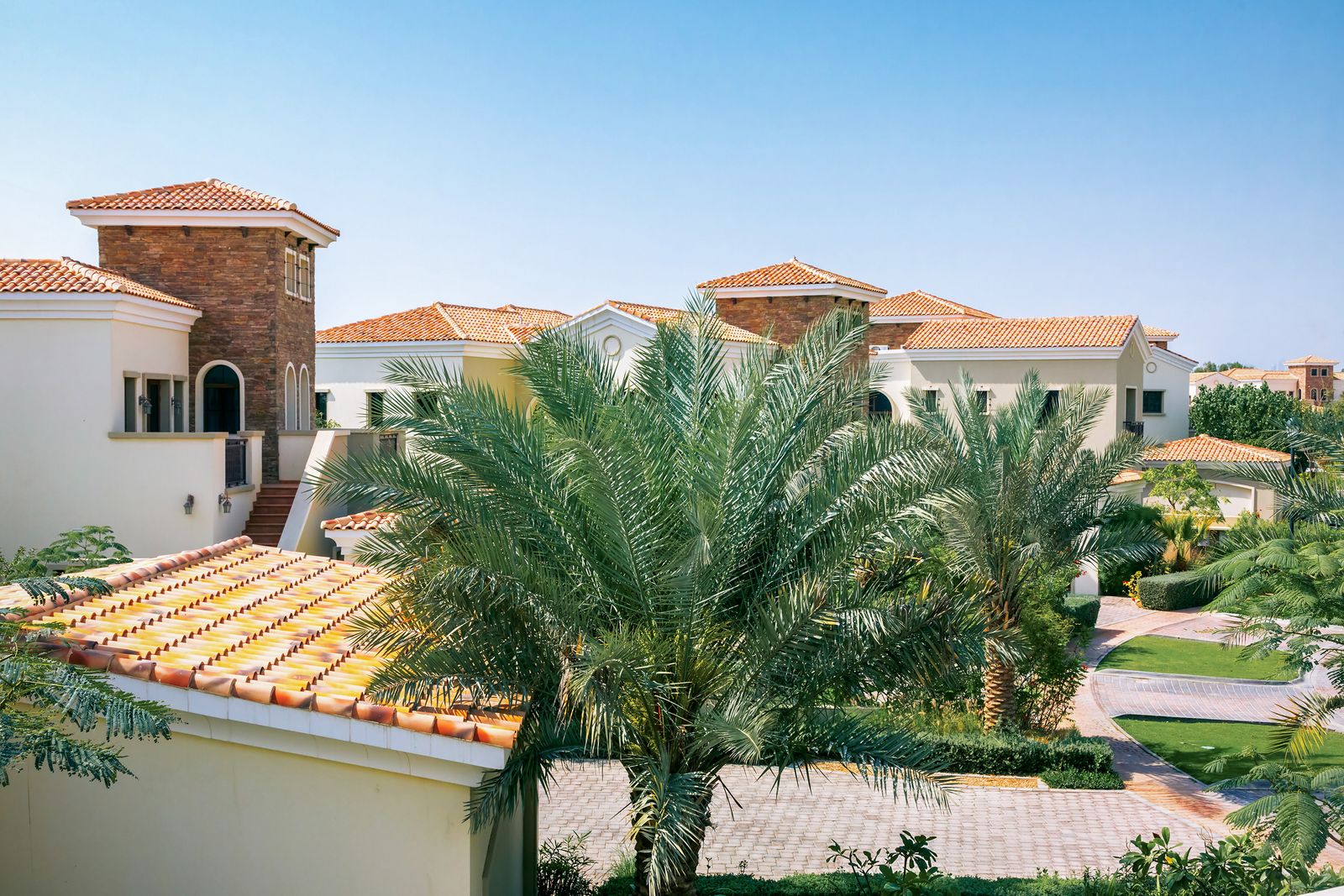
Long before Dubai’s skyline became shorthand for the emirate’s ambition, a different kind of ambition was taking root inland — not upward, but outward, into low-rise streets lined with sand-toned villas, private gardens and a golf course carved out of the desert. Launched in 2004, Arabian Ranches was one of the first communities in Dubai built explicitly for family life rather than investment velocity, and it has spent two decades proving that low-density living can be just as sought-after here as any waterfront tower.
Why Arabian Ranches Matters
Arabian Ranches was Emaar’s first fully realised suburban masterplan, and it set a template that much of Dubai’s later villa development has since followed. The community grew in three distinct phases: the original Arabian Ranches launched in 2004, Arabian Ranches 2 followed in 2012, and Arabian Ranches 3 arrived in 2019 — together spanning roughly 6.5 million square metres of low-rise, gated living.
Each phase has its own identity. Arabian Ranches 1 is broken into close to thirty named sub-communities, among them Alvorada, Mirador, Saheel and Aseel, each with a slightly different architectural style and price point. Arabian Ranches 2 organises itself around clusters such as Casa, Lila, Rasha, Rosa, Yasmin and Camelia. What carries across every phase is the same underlying promise — private gardens, low perimeter walls instead of shared corridors, and streets designed around families rather than footfall.
The Investment Case
Arabian Ranches is not typically where an investor comes looking for the fastest headline yield in Dubai — and that is, in a sense, exactly the point. Gross rental yields across the community have generally run in the high-four to mid-six percent range, with Arabian Ranches 2 tending to outperform the original phase slightly. What underpins those numbers is tenancy quality rather than turnover: schools on or near the community, including Ranches Primary School and JESS Arabian Ranches, anchor multi-year family tenancies that keep vacancy low and rental income steady.
Perhaps the more telling figure is who is actually buying. End-users — families intending to live in the villa themselves rather than lease it out — are reported to make up well over seventy percent of purchasers in Arabian Ranches, a notably high share for a Dubai community. That balance says something real about the address: demand here is driven by people who want to live in Arabian Ranches, not simply by capital looking for a return. Growth in recent years has also come from UAE-resident expatriate families trading rented apartments for their first owned villa, alongside a rising share of UK, Indian and European buyers using the community as a primary residence tied to Golden Visa eligibility.
Who Arabian Ranches Suits
This is, first and foremost, a community for families. Buyers with school-age children benefit from genuine walk-or-short-drive access to well-regarded schools, alongside parks, pools and sports facilities built into the masterplan rather than added as an afterthought. It also suits anyone trading an apartment lifestyle for space — a private garden, a driveway, room for pets — without giving up the security and consistency of an Emaar-managed gated community.
It suits an investor too, but a particular kind: one prioritising a stable, long-let tenant base and low vacancy over the highest possible headline yield. Buyers looking for short-term holiday-let income or fast, apartment-style turnover are generally better served elsewhere — Arabian Ranches rewards a hold, not a flip.
Lifestyle and Connectivity
Life in Arabian Ranches is built around its amenities rather than around any single landmark. The Arabian Ranches Golf Club offers an 18-hole championship course with a full clubhouse, while the Dubai Polo and Equestrian Club — stables, riding arenas and polo pitches included — gives the community a genuinely distinctive character among Dubai’s residential addresses. The Arabian Ranches Community Centre supplies everyday retail, dining and a supermarket, and the wider community layers in mosques, healthcare, tennis and basketball courts, and shaded walking and cycling tracks.
Connectivity is deliberately car-first rather than metro-first: the community borders Sheikh Mohammed Bin Zayed Road (E311) directly, with Al Qudra Road offering a further route into central Dubai. There is no metro station within the community, and for most residents that is part of the appeal rather than a drawback — Arabian Ranches was designed as a quiet, self-contained suburb rather than a transit-oriented district, and buyers should weigh that trade-off consciously rather than expect Downtown-style connectivity.
Frequently Asked Questions
Is Arabian Ranches good for families?
Yes — arguably more than almost any other community in Dubai. It was designed around family life from the outset, with schools, parks and low-density villa streets built into the masterplan rather than retrofitted. The presence of established schools such as Ranches Primary School and JESS Arabian Ranches, combined with gated security and a strong sense of community, is a major reason end-users make up such a large share of buyers here.
What is the difference between Arabian Ranches 1, 2 and 3?
Arabian Ranches 1, launched in 2004, is the original phase and includes close to thirty distinct sub-communities with a range of architectural styles and price points. Arabian Ranches 2, launched in 2012, is organised around named clusters and tends to command slightly higher yields and more contemporary villa designs. Arabian Ranches 3, the newest phase from 2019, brings the most modern layouts and amenities to the masterplan. All three share the same underlying villa-and-garden format, gated structure and Emaar management.
What rental returns can investors expect in Arabian Ranches?
Gross rental yields have generally sat in the high-four to mid-six percent range depending on phase and villa type, with Arabian Ranches 2 typically at the stronger end. The more important number for many investors is stability: school-anchored, multi-year family tenancies tend to keep vacancy low, making the community a reliable long-term hold rather than a high-turnover yield play.
Two decades on, Arabian Ranches remains the reference point against which most of Dubai’s newer villa communities are still measured. For buyers weighing which phase, sub-community or villa type genuinely fits their family or portfolio, Arsha Homes can help narrow the search and surface the right opportunity in Arabian Ranches.